/405x405/Listings/Images/2026/03/957/guesty_69a93bac051fe3.706149351772698540218.jpg)
/405x405/Listings/Images/2026/03/957/guesty_69a93bb6ce4d66.726073691772698551154.jpg)
/405x405/Listings/Images/2026/03/957/guesty_69a93bbf52ef65.621365281772698559542.jpg)
/405x405/Listings/Images/2026/03/957/guesty_69a93bb81445f4.836379791772698552334.jpg)
/405x405/Listings/Images/2026/03/972/guesty_69a93baf8022b9.196055361772698543547.jpg)
/405x405/Listings/Images/2026/03/972/guesty_69a93bb6cfaa63.322316271772698551153.jpg)
/405x405/Listings/Images/2026/03/972/guesty_69a93bbf515e59.025110761772698559549.jpg)
/405x405/Listings/Images/2026/03/972/guesty_69a93bb812e7f9.165694301772698552334.jpg)
/405x405/Listings/Images/2026/03/1010/guesty_69a93bb39c6f48.528172911772698547663.jpg)
/405x405/Listings/Images/2026/03/1010/guesty_69a93bba3ca477.701430481772698554271.jpg)
/405x405/Listings/Images/2026/03/1010/guesty_69a93bbf54b551.182857851772698559542.jpg)
/405x405/Listings/Images/2026/03/1010/guesty_69a93bbb0a10f4.434466271772698555065.jpg)
/405x405/Listings/Images/2026/03/1072/guesty_69aa48e311eb60.892681741772767459101.jpg)
/405x405/Listings/Images/2026/03/1072/guesty_69aa48e4ae65b6.321103191772767460738.jpg)
/405x405/Listings/Images/2026/03/1072/guesty_69aa48e5de0bf5.227073891772767461929.jpg)
/405x405/Listings/Images/2026/03/1072/guesty_69aa48e4db1214.599369231772767460924.jpg)
/405x405/Listings/Images/2026/03/1073/guesty_69aa48f056b455.389511421772767472381.jpg)
/405x405/Listings/Images/2026/03/1073/guesty_69aa48f1e442a7.769008931772767473958.jpg)
/405x405/Listings/Images/2026/03/1073/guesty_69aa48f33dc2d1.880083221772767475276.jpg)
/405x405/Listings/Images/2026/03/1073/guesty_69aa48f21b2b18.017917251772767474134.jpg)
/405x405/Listings/Images/2026/03/1074/guesty_69aa48f7579de5.582544741772767479382.jpg)
/405x405/Listings/Images/2026/03/1074/guesty_69aa48f8cf4c00.830395411772767480873.jpg)
/405x405/Listings/Images/2026/03/1074/guesty_69aa48fa07bca6.202931551772767482050.jpg)
/405x405/Listings/Images/2026/03/1074/guesty_69aa48f9073b46.108592081772767481052.jpg)
/405x405/Listings/Images/2026/03/1075/guesty_69aa48fd9c5644.188050011772767485660.jpg)
/405x405/Listings/Images/2026/03/1075/guesty_69aa48ff178449.077775811772767487116.jpg)
/405x405/Listings/Images/2026/03/1075/guesty_69aa4900332330.032127981772767488233.jpg)
/405x405/Listings/Images/2026/03/1075/guesty_69aa48ff41e0a5.933565541772767487292.jpg)
/405x405/Listings/Images/2026/03/1078/guesty_69aa4909f23955.236518351772767498016.jpg)
/405x405/Listings/Images/2026/03/1078/guesty_69aa490b781de4.926381311772767499516.jpg)
/405x405/Listings/Images/2026/03/1078/guesty_69aa490c9f7840.036881261772767500677.jpg)
/405x405/Listings/Images/2026/03/1078/guesty_69aa490ba5a534.816013511772767499701.jpg)
/405x405/Listings/Images/2026/03/1079/guesty_69aa49106315c1.326408571772767504429.jpg)
/405x405/Listings/Images/2026/03/1079/guesty_69aa4911d6c8e5.429915731772767505901.jpg)
/405x405/Listings/Images/2026/03/1079/guesty_69aa49130a0ad5.230576681772767507066.jpg)
/405x405/Listings/Images/2026/03/1079/guesty_69aa491210b6a7.204230891772767506092.jpg)
/405x405/Listings/Images/2026/03/1080/guesty_69aa4919bfc8f5.440619151772767513809.jpg)
/405x405/Listings/Images/2026/03/1080/guesty_69aa491b39aed5.642625421772767515258.jpg)
/405x405/Listings/Images/2026/03/1080/guesty_69aa491c52cfe8.317525491772767516370.jpg)
/405x405/Listings/Images/2026/03/1080/guesty_69aa491b632994.233709251772767515430.jpg)
/405x405/Listings/Images/2026/02/1478/guesty_6980205e6d0ec2.874998461770004574551.jpg)
/405x405/Listings/Images/2026/02/1478/guesty_6980205ee56497.155916251770004575082.jpg)
/405x405/Listings/Images/2026/02/1478/guesty_6980205f6b0f79.124814941770004575594.jpg)
/405x405/Listings/Images/2026/02/1478/guesty_6980205fe7c7c2.098857191770004576212.jpg)
/405x405/Listings/Images/2026/02/1479/guesty_699004454201f5.836911601771045957286.jpg)
/405x405/Listings/Images/2026/02/1479/guesty_69900445a82078.516880211771045957707.jpg)
/405x405/Listings/Images/2026/02/1479/guesty_699004460f2e14.134704591771045958083.jpg)
/405x405/Listings/Images/2026/02/1479/guesty_699004466a9da5.794481111771045958454.jpg)
/405x405/Listings/Images/2026/02/1480/guesty_69900448484e41.773499981771045960316.jpg)
/405x405/Listings/Images/2026/02/1480/guesty_69900448ae6838.130005531771045960737.jpg)
/405x405/Listings/Images/2026/02/1480/guesty_6990044915bbf1.829177651771045961108.jpg)
/405x405/Listings/Images/2026/02/1480/guesty_699004496f8976.078331581771045961496.jpg)
/405x405/Listings/Images/2026/02/1481/guesty_699004473d9dc9.217356901771045959275.jpg)
/405x405/Listings/Images/2026/02/1481/guesty_69900447a64af2.946960791771045959699.jpg)
/405x405/Listings/Images/2026/02/1481/guesty_699004480c0e68.530881531771045960069.jpg)
/405x405/Listings/Images/2026/02/1481/guesty_6990044865d265.849562531771045960436.jpg)
/405x405/Listings/Images/2026/02/1482/guesty_69900448472413.708999111771045960310.jpg)
/405x405/Listings/Images/2026/02/1482/guesty_69900448ad54f4.374176831771045960733.jpg)
/405x405/Listings/Images/2026/02/1482/guesty_6990044913cd44.956324011771045961097.jpg)
/405x405/Listings/Images/2026/02/1482/guesty_699004496cf5f2.441080571771045961484.jpg)
/405x405/Listings/Images/2026/02/1483/guesty_699004494110a6.381231081771045961296.jpg)
/405x405/Listings/Images/2026/02/1483/guesty_69900449bce9d3.982556671771045961792.jpg)
/405x405/Listings/Images/2026/02/1483/guesty_6990044a23b150.206346061771045962166.jpg)
/405x405/Listings/Images/2026/02/1483/guesty_6990044a7f4356.674852771771045962539.jpg)
/405x405/Listings/Images/2026/02/1484/guesty_699004495a6082.266152221771045961394.jpg)
/405x405/Listings/Images/2026/02/1484/guesty_69900449d03435.854338521771045961872.jpg)
/405x405/Listings/Images/2026/02/1484/guesty_6990044a36bc98.296700841771045962245.jpg)
/405x405/Listings/Images/2026/02/1484/guesty_6990044a96daa2.584292331771045962644.jpg)
/405x405/Listings/Images/2026/02/1485/guesty_6990044961dd07.404832971771045961423.jpg)
/405x405/Listings/Images/2026/02/1485/guesty_69900449d995f1.088172881771045961920.jpg)
/405x405/Listings/Images/2026/02/1485/guesty_6990044a4b3b93.546769731771045962355.jpg)
/405x405/Listings/Images/2026/02/1485/guesty_6990044abe4576.468017841771045962804.jpg)
/405x405/Listings/Images/2026/02/1486/guesty_699004442dbdb2.589952761771045956210.jpg)
/405x405/Listings/Images/2026/02/1486/guesty_69900444966a43.323929461771045956636.jpg)
/405x405/Listings/Images/2026/02/1486/guesty_69900444f00308.113321351771045957001.jpg)
/405x405/Listings/Images/2026/02/1486/guesty_69900445555735.740941181771045957367.jpg)
/405x405/Listings/Images/2026/02/1487/guesty_6990044854b228.254930491771045960371.jpg)
/405x405/Listings/Images/2026/02/1487/guesty_69900448bd2554.376106681771045960790.jpg)
/405x405/Listings/Images/2026/02/1487/guesty_699004492191c4.162741851771045961156.jpg)
/405x405/Listings/Images/2026/02/1487/guesty_699004497ddb54.584120201771045961555.jpg)
/405x405/Listings/Images/2026/02/1488/guesty_699004496a6fe7.806982761771045961477.jpg)
/405x405/Listings/Images/2026/02/1488/guesty_69900449e165c7.737715451771045961951.jpg)
/405x405/Listings/Images/2026/02/1488/guesty_6990044a49deb0.321911821771045962327.jpg)
/405x405/Listings/Images/2026/02/1488/guesty_6990044ab32170.480044801771045962753.jpg)
/405x405/Listings/Images/2026/02/1489/guesty_6990044964db61.775654851771045961441.jpg)
/405x405/Listings/Images/2026/02/1489/guesty_69900449ddba61.932891801771045961949.jpg)
/405x405/Listings/Images/2026/02/1489/guesty_6990044a4b0744.993343361771045962352.jpg)
/405x405/Listings/Images/2026/02/1489/guesty_6990044ab6af47.080412961771045962770.jpg)
/405x405/Listings/Images/2026/02/1490/guesty_6990044962c3e8.686382601771045961438.jpg)
/405x405/Listings/Images/2026/02/1490/guesty_69900449d8e6a2.597277441771045961913.jpg)
/405x405/Listings/Images/2026/02/1490/guesty_6990044a4721e6.472588991771045962359.jpg)
/405x405/Listings/Images/2026/02/1490/guesty_6990044abbba83.432587351771045962795.jpg)
/405x405/Listings/Images/2026/02/1491/guesty_69900449c8e018.469664441771045961842.jpg)
/405x405/Listings/Images/2026/02/1491/guesty_6990044a3d1d51.568081481771045962268.jpg)
/405x405/Listings/Images/2026/02/1491/guesty_6990044a9c2352.351541401771045962672.jpg)
/405x405/Listings/Images/2026/02/1491/guesty_6990044b077d65.052826871771045963056.jpg)
/405x405/Listings/Images/2026/02/1492/guesty_6990044a6e3b73.879663641771045962478.jpg)
/405x405/Listings/Images/2026/02/1492/guesty_6990044ad66418.866314301771045962898.jpg)
/405x405/Listings/Images/2026/02/1492/guesty_6990044b3cc277.982235051771045963271.jpg)
/405x405/Listings/Images/2026/02/1492/guesty_6990044b9d9a69.824231291771045963673.jpg)
/405x405/Listings/Images/2026/02/1493/guesty_6990044a843531.393728421771045962559.jpg)
/405x405/Listings/Images/2026/02/1493/guesty_6990044aee7603.615993091771045962996.jpg)
/405x405/Listings/Images/2026/02/1493/guesty_6990044b539f94.814605841771045963364.jpg)
/405x405/Listings/Images/2026/02/1493/guesty_6990044bb7b044.345910081771045963770.jpg)
/405x405/Listings/Images/2026/02/1494/guesty_6990044a838ba5.100890861771045962562.jpg)
/405x405/Listings/Images/2026/02/1494/guesty_6990044b01fa62.850580751771045963028.jpg)
/405x405/Listings/Images/2026/02/1494/guesty_6990044b5e57b9.492392491771045963411.jpg)
/405x405/Listings/Images/2026/02/1494/guesty_6990044bc000d1.985978381771045963810.jpg)
/405x405/Listings/Images/2026/02/1495/guesty_6990044b8ab669.209297971771045963586.jpg)
/405x405/Listings/Images/2026/02/1495/guesty_6990044c008b73.131389431771045964021.jpg)
/405x405/Listings/Images/2026/02/1495/guesty_6990044c59b9c1.579545941771045964383.jpg)
/405x405/Listings/Images/2026/02/1495/guesty_6990044cb1a2b8.272816191771045964764.jpg)
/405x405/Listings/Images/2026/02/1496/guesty_6990044a817d15.899807651771045962552.jpg)
/405x405/Listings/Images/2026/02/1496/guesty_6990044b03dc80.703894741771045963036.jpg)
/405x405/Listings/Images/2026/02/1496/guesty_6990044b5f0c26.403445531771045963415.jpg)
/405x405/Listings/Images/2026/02/1496/guesty_6990044bc94455.914833261771045963872.jpg)
/405x405/Listings/Images/2026/02/1497/guesty_6990044ab768a3.485076081771045962770.jpg)
/405x405/Listings/Images/2026/02/1497/guesty_6990044b2dfe23.779650501771045963210.jpg)
/405x405/Listings/Images/2026/02/1497/guesty_6990044b92a034.144657441771045963623.jpg)
/405x405/Listings/Images/2026/02/1497/guesty_6990044bf14491.516862791771045964011.jpg)
/405x405/Listings/Images/2026/02/1518/guesty_6990045c098d42.455572281771045980324.jpg)
/405x405/Listings/Images/2026/02/1518/guesty_6990045cb2e215.042246991771045980907.jpg)
/405x405/Listings/Images/2026/02/1518/guesty_6990045d4197e4.993497141771045981287.jpg)
/405x405/Listings/Images/2026/02/1519/guesty_69801ff63cd9e0.150890261770004470325.jpg)
/405x405/Listings/Images/2026/02/1519/guesty_69801ff6a71ba4.968565461770004470701.jpg)
/405x405/Listings/Images/2026/02/1519/guesty_6990045c795ac1.302937361771045980832.jpg)
/405x405/Listings/Images/2026/02/1520/guesty_6990045c9ba357.466889571771045980662.jpg)
/405x405/Listings/Images/2026/02/1520/guesty_6990045d182518.543287471771045981120.jpg)
/405x405/Listings/Images/2026/02/1520/guesty_6990045d768254.089079491771045981503.jpg)
/405x405/Listings/Images/2026/02/1521/guesty_6990045d2a7202.418482561771045981195.jpg)
/405x405/Listings/Images/2026/02/1521/guesty_6990045d936a03.912542001771045981627.jpg)
/405x405/Listings/Images/2026/02/1521/guesty_69801ff71320e2.327793851770004471169.jpg)
/405x405/Listings/Images/2026/02/1522/guesty_6990045d7eea62.116205691771045981536.jpg)
/405x405/Listings/Images/2026/02/1522/guesty_6990045de5e664.993819381771045981962.jpg)
/405x405/Listings/Images/2026/02/1522/guesty_6990045e5b8da9.221238551771045982398.jpg)
/405x405/Listings/Images/2026/02/1523/guesty_6990045d813db3.201531381771045981546.jpg)
/405x405/Listings/Images/2026/02/1523/guesty_6990045de3f8f9.505065971771045981962.jpg)
/405x405/Listings/Images/2026/02/1523/guesty_6990045e4f1988.983173921771045982345.jpg)
/405x405/Listings/Images/2026/02/1524/guesty_6990045e05bd04.891137691771045982042.jpg)
/405x405/Listings/Images/2026/02/1524/guesty_6990045e79d8e7.060747601771045982520.jpg)
/405x405/Listings/Images/2026/02/1524/guesty_6990045ed7f145.088612931771045982917.jpg)
/405x405/Listings/Images/2026/02/1525/guesty_6990045e7c2100.621243671771045982529.jpg)
/405x405/Listings/Images/2026/02/1525/guesty_6990045ee595a5.207239901771045982959.jpg)
/405x405/Listings/Images/2026/02/1525/guesty_6990045f4dd9b6.802274911771045983341.jpg)
/405x405/Listings/Images/2026/02/1526/guesty_6990045e80c1e0.987101161771045982556.jpg)
/405x405/Listings/Images/2026/02/1526/guesty_6990045eeb35c7.278072071771045982984.jpg)
/405x405/Listings/Images/2026/02/1526/guesty_6990045f52e5b8.475054821771045983359.jpg)
/405x405/Listings/Images/2026/02/1527/guesty_6990045cefcc78.231314351771045981003.jpg)
/405x405/Listings/Images/2026/02/1527/guesty_6990045d652ae6.760270651771045981439.jpg)
/405x405/Listings/Images/2026/02/1527/guesty_6990045dc3bff5.055385281771045981827.jpg)
/405x405/Listings/Images/2026/02/1529/guesty_6990045f234fa0.724220851771045983164.jpg)
/405x405/Listings/Images/2026/02/1529/guesty_6990045f89de38.782667081771045983583.jpg)
/405x405/Listings/Images/2026/02/1529/guesty_6990045fe5f7f5.493364281771045983964.jpg)
/405x405/Listings/Images/2026/02/1530/guesty_6990045f13f942.127726001771045983101.jpg)
/405x405/Listings/Images/2026/02/1530/guesty_6990045f7c36a8.444583821771045983527.jpg)
/405x405/Listings/Images/2026/02/1530/guesty_6990045fd60889.274660911771045983907.jpg)
/405x405/Listings/Images/2026/02/1531/guesty_69900460352d17.280074831771045984238.jpg)
/405x405/Listings/Images/2026/02/1531/guesty_699004609b0e86.471049671771045984661.jpg)
/405x405/Listings/Images/2026/02/1531/guesty_6990046103da94.764291331771045985039.jpg)
/405x405/Listings/Images/2026/02/1532/guesty_69900460aafda9.221418941771045984720.jpg)
/405x405/Listings/Images/2026/02/1532/guesty_699004611a95f5.123903861771045985130.jpg)
/405x405/Listings/Images/2026/02/1532/guesty_6990046175c531.286688391771045985502.jpg)
/405x405/Listings/Images/2026/02/1533/guesty_69900464ae2c65.703194791771045988730.jpg)
/405x405/Listings/Images/2026/02/1533/guesty_699004651dd2a4.672895291771045989144.jpg)
/405x405/Listings/Images/2026/02/1533/guesty_69900465783152.556214521771045989513.jpg)
/405x405/Listings/Images/2026/02/1534/guesty_699004611ee960.912298441771045985146.jpg)
/405x405/Listings/Images/2026/02/1534/guesty_69900461842f69.353395091771045985558.jpg)
/405x405/Listings/Images/2026/02/1534/guesty_69900461e09214.009377931771045985938.jpg)
/405x405/Listings/Images/2026/02/1535/guesty_6990046132fa51.670974571771045985228.jpg)
/405x405/Listings/Images/2026/02/1535/guesty_699004619844f3.170086861771045985643.jpg)
/405x405/Listings/Images/2026/02/1535/guesty_69900461f1bc04.956425341771045986013.jpg)
/405x405/Listings/Images/2026/02/1536/guesty_69900461a57042.574887531771045985697.jpg)
/405x405/Listings/Images/2026/02/1536/guesty_6990046218dbd5.282847871771045986121.jpg)
/405x405/Listings/Images/2026/02/1536/guesty_6990046273b280.789219181771045986502.jpg)
/405x405/Listings/Images/2026/02/1537/guesty_6990045f853d08.103900981771045983563.jpg)
/405x405/Listings/Images/2026/02/1537/guesty_6990045fec2a71.879366121771045983991.jpg)
/405x405/Listings/Images/2026/02/1537/guesty_699004605842c0.422028441771045984384.jpg)
/405x405/Listings/Images/2026/02/1538/guesty_69900461904e41.421057201771045985615.jpg)
/405x405/Listings/Images/2026/02/1538/guesty_6990046206bfe5.875679001771045986048.jpg)
/405x405/Listings/Images/2026/02/1538/guesty_6990046263e8d6.873443841771045986426.jpg)
/405x405/Listings/Images/2026/02/1625/guesty_6990044b5475d2.641471411771045963375.jpg)
/405x405/Listings/Images/2026/02/1625/guesty_6990044bcaa7d0.773363761771045963856.jpg)
/405x405/Listings/Images/2026/02/1625/guesty_6990044c3c6c39.918664581771045964264.jpg)
/405x405/Listings/Images/2026/02/1625/guesty_6990044c97ae72.663065531771045964645.jpg)
/405x405/Listings/Images/2026/02/1626/guesty_6990044bbaac50.696821511771045963785.jpg)
/405x405/Listings/Images/2026/02/1626/guesty_6990044c3f1f73.569796741771045964279.jpg)
/405x405/Listings/Images/2026/02/1626/guesty_6990044c9b09a7.323684141771045964660.jpg)
/405x405/Listings/Images/2026/02/1626/guesty_6990044d17b6a3.149159331771045965113.jpg)
/405x405/Listings/Images/2026/02/1627/guesty_6990044bc4d5d2.297946331771045963834.jpg)
/405x405/Listings/Images/2026/02/1627/guesty_6990044c4ccc68.485632271771045964339.jpg)
/405x405/Listings/Images/2026/02/1627/guesty_6990044ca9db79.949910131771045964748.jpg)
/405x405/Listings/Images/2026/02/1627/guesty_6990044d1ea4a8.829685741771045965146.jpg)
/405x405/Listings/Images/2026/02/1628/guesty_6990044c40f881.799455311771045964293.jpg)
/405x405/Listings/Images/2026/02/1628/guesty_6990044cafb6f8.792617161771045964756.jpg)
/405x405/Listings/Images/2026/02/1628/guesty_6990044d1c5d95.488690661771045965141.jpg)
/405x405/Listings/Images/2026/02/1628/guesty_6990044d88d704.487292751771045965582.jpg)
/405x405/Listings/Images/2026/02/1629/guesty_6990044ccd8844.492796851771045964864.jpg)
/405x405/Listings/Images/2026/02/1629/guesty_6990044d4dd662.630061041771045965342.jpg)
/405x405/Listings/Images/2026/02/1629/guesty_6990044dafc800.039444191771045965737.jpg)
/405x405/Listings/Images/2026/02/1629/guesty_6990044e1595f8.034408341771045966105.jpg)
/405x405/Listings/Images/2026/02/1630/guesty_699004223fde41.605108391771045922488.jpg)
/405x405/Listings/Images/2026/02/1630/guesty_69900422dba9e7.468458981771045923079.jpg)
/405x405/Listings/Images/2026/02/1630/guesty_699004236aade7.526905561771045923619.jpg)
/405x405/Listings/Images/2026/02/1630/guesty_69900423ee8397.595210101771045924139.jpg)
/405x405/Listings/Images/2026/02/1631/guesty_6990044b477044.799938741771045963318.jpg)
/405x405/Listings/Images/2026/02/1631/guesty_6990044bb92323.553162231771045963778.jpg)
/405x405/Listings/Images/2026/02/1631/guesty_6990044c1f8c98.300255021771045964151.jpg)
/405x405/Listings/Images/2026/02/1631/guesty_6990044c7a6f91.995480421771045964517.jpg)
OUR ADVENTURE MAP
Where we stayed
We've plotted our adventure on the map below. Select the map icons to discover more details.

/960x720/upload/2026/05/267/jpg1779066915178.jpg)
Queensland earns its reputation with the reef, the rainforest, and the long, golden coastline that stretches further than most countries. Reputation has a way of narrowing attention, and what gets left out of the picture is often the more interesting part of any story.
The Granite Belt sits at nearly 1,000 meters above sea level in the state's southern corner, two and a half hours from Brisbane, and operates on entirely different terms from the Queensland most people know. The air is cooler here, the light in the evening is longer and softer, and ancient rock formations push up through eucalypt forest.
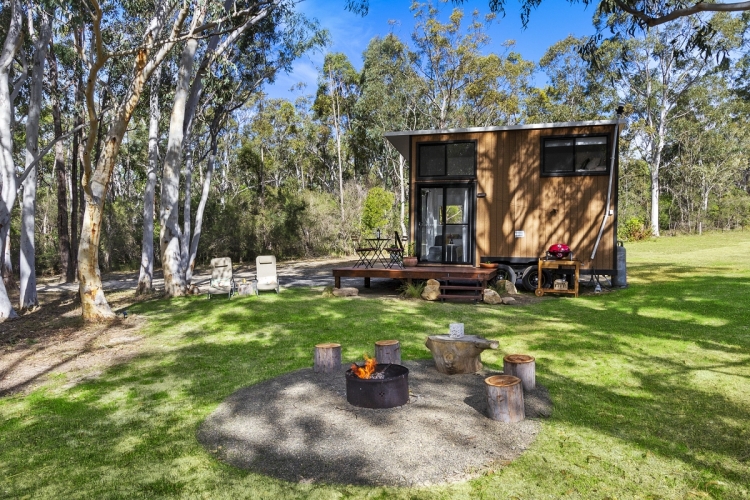
Tiny Away Escape at Granite Belt, formerly Sommerville Valley Tourist Park, sits 12 kilometers from Stanthorpe on the shores of Storm King Dam. The dam stretches wide in front of you, native bush frames the perimeter, and pelicans move across the surface with the kind of indifference only birds living in genuinely good habitat can afford. The property has been a destination since the early 2000s, and the Tiny Away partnership has brought the eco-friendly tiny house experience to one of the region's best lakeside positions. Pull up, unpack, and the place starts working its charm on you immediately.
What Makes the Granite Belt Different From the Rest of Queensland
The Granite Belt is Australia's highest wine region, and the elevation is not a marketing point. It affects the length of the growing season, the character of the wines, and the particular quality of the air when you step outside in the morning. The soils are deep, granitic gravels formed over 200 million years, producing conditions that cannot be replicated anywhere in Queensland that is lower or warmer.
Over 50 wineries operate within reach of Stanthorpe, and the region also grows the entirety of Queensland's apple crop every year. The farm gate culture, the open orchards, the produce markets, and the cellar doors make this a destination where the food-and-wine conversation is just as lovingly discussed as the scenery.
Stanthorpe and the Granite Belt have something to offer in every season. Winter means fireplaces, shiraz, and fog sitting in the valley at dawn. Spring brings wildflowers through the granite formations at Girraween National Park. Summer runs mild by Queensland standards, and the orchards and wineries hit full pace through autumn harvest.
On-Site Activities at Tiny Away Escape at Granite Belt
The property is designed for people who want to use the place where they are staying. The grounds sit directly on Storm King Dam, and the combination of water, open space, and wildlife gives the property its own routine before you have factored in anything outside the fence line.
Canoes are available for hire directly from the park, putting you on the water without any external logistics to manage. Take one out in the early morning when the surface is flat, and the birds are working the shallows.
Wildlife on the property includes kangaroos, wallabies, possums, lizards, parrots, cockatoos, pelicans, and swans. Sit outside in the late afternoon, and most of it comes to you. The park has modern camp kitchens, amenity blocks with hot showers, a laundry, undercover barbecue areas, and a community room. Stargazing after dark is a genuine highlight, with the property sitting well clear of any meaningful light pollution. Once you have the campfire going, it will keep you outside longer than you planned.
Storm King Dam: The History Behind the View
Storm King Dam takes its name from the Storm King Mining Company, established by John Yaldwyn and James Ross, who arrived in Australia aboard a ship named the Storm King on 9 February 1872. The dam was first proposed in 1928 and completed in 1954, built to supply water to the town of Stanthorpe. What started as regional infrastructure became something recreational over time, and the park grew up around it in the early 2000s.
Today, the dam is used for fishing, water sports, birdwatching, and picnics. Fish species include golden perch, Murray cod, silver perch, jewfish, and river blackfish. A jetty, boat ramp, barbecue areas, picnic tables, drinking water, and a swimming area are all available on site. Pelicans work the shallows in the early morning. Kangaroos come down to the grass as the light fades. The road that circles the dam's entire perimeter makes for a good walk if you want to get your legs moving without committing to a full trail.
Staying at Tiny Away Escape at Granite Belt means the dam is what you look at from your veranda while the kettle boils. It is the view.
Girraween National Park: Granite Belt's Ancient Landscape
Girraween means "place of flowers" in the local Aboriginal language. The park protects 11,800 hectares of granite landscape, with formations dating back 230 million years to when Australia was still part of the supercontinent Gondwana. It sits about 40 kilometers south of Stanthorpe, and the walking tracks cover about 30 kilometers in total. The Pyramid scramble is the most well-known route: the track passes through eucalyptus and past balancing boulders until the ground opens to a full view of the national park and the ranges beyond.
September and October are the peak wildflower months, with white heaths mixing alongside yellow, purple, and red pea flowers, Pink Trigger Plants, golden Billy Buttons, Granite Bluebells, and Native Sarsaparilla coming up through the rock and heath. Blue wrens and rare turquoise parrots move through the forest canopy, and bearded dragons and jacky lizards bask across the warm granite surfaces throughout the day. Go in the morning, bring along more water than you think you need to stay hydrated, and give yourself time to slow down once you are there.
Ballandean Estate: The Granite Belt's Oldest Winery
Ballandean Estate is Queensland's oldest family-owned and operated winery, sitting at 850 meters above sea level on Sundown Road in Ballandean. The cellar door opens daily from 9 am to 5 pm. The Barrelroom wine lounge serves signature grazing platters, cheese boards, and wine flights from 11am, and the range includes Strange Bird alternative varietals alongside the estate's well-established Shiraz and Cabernet lines.
On Mondays, the family runs an intimate experience: a vineyard tour and behind-the-scenes look at the winemaking history, followed by a two-course lunch with matched wines beside the barrels in the Barrelroom. Wine has been made on the estate since 1932, and the oldest Shiraz vines date to 1968, when Angelo Puglisi planted the first block and set the foundation for the entire Granite Belt wine industry as it exists today.
The Strange Bird program, which includes Saperavi from Georgia and Fiano from southern Italy, sets the Granite Belt apart from most other Australian wine regions.
Why the Granite Belt Rewards Staying Longer
The Tiny Away escape sits 12 kilometers from Stanthorpe, which is close enough to reach every winery, orchard, and national park in the region without the day becoming a commute. When you return to the property in the evening, the dam is waiting, along with the wildlife, the campfire, and a sky worth staying up for.
Three practical points worth knowing before you book:
Canoes are available to hire directly from the park, which means the dam is accessible from the moment you decide to use it. The tiny houses include private en-suites, full kitchen facilities, and everything required for a multi-night stay with no gaps. The grounds themselves function as a destination: wildlife, open water, and space that accommodation closer to town cannot replicate, regardless of how convenient the location is.
The Granite Belt Has a Way of Recalibrating Things
The first afternoon is an adjustment. The pace starts to settle in, the bird noise becomes something you are listening to, and the absence of the city's background hum becomes noticeable in a way that takes a little getting used to.
By the second morning, the rhythm of the place has settled in. You are up earlier than usual because the light coming off the dam is worth seeing. You stay longer at the cellar door because the conversation went somewhere interesting. You eat outside because the temperature dropped just enough to justify the fire, and the sky overhead is doing something worth paying attention to.
Show up with a loose plan, leave room for the day to run long, and pay attention to what is around you. The landscape, the producers, and the particular quality of the light at the end of the day will take care of the rest.
To check availability and book your stay, visit Granite Belt.
/960x720/upload/2026/05/267/JPG1779066911865.jpg)
/960x720/upload/2026/05/267/jpg1779066920452.jpg)
/960x720/upload/2026/05/267/jpg1779066920068.jpg)
/960x720/upload/2026/05/267/jpg1779066919389.jpg)
/960x720/upload/2026/05/267/jpg1779066918930.jpg)
/960x720/upload/2026/05/267/jpg1779066917402.jpg)
/960x720/upload/2026/05/267/jpg1779066916484.jpg)
/960x720/upload/2026/05/267/jpg1779066916082.jpg)
/960x720/upload/2026/05/267/JPG1779066912866.jpg)
/960x720/upload/2026/05/267/jpeg1779066900008.jpeg)
/960x720/upload/2026/05/267/JPG1779066911673.jpg)
/960x720/upload/2026/05/267/JPG1779066911480.jpg)
/960x720/upload/2026/05/267/JPG1779066910645.jpg)
/960x720/upload/2026/05/267/JPG1779066909264.jpg)
/960x720/upload/2026/05/267/JPG1779066908730.jpg)
/960x720/upload/2026/05/267/jpg1779066908503.jpg)
/960x720/upload/2026/05/267/jpg1779066908243.jpg)
/960x720/upload/2026/05/267/jpeg1779066900342.jpeg)
/960x720/upload/2026/05/267/jpeg1779066900145.jpeg)
We've plotted our adventure on the map below. Select the map icons to discover more details.